[language-switcher]
Curtains for the way you live

French Door Curtains

French door curtains should work with the doorway you use every day. Explore fabrics for an above-door rod or track, then plan the hanging position, handle clearance and space for the open panels.

Shopping for a curtain fitted directly to each door? Start with the mounting choices below.

Find your fabric

Find the look for your French doors

Compare outer curtains and daytime sheers for a rod or track above the opening. Open each product to check the available header, lining and size; door-mounted hardware is a separate choice.

These are fabric options for planning an above-door treatment. Confirm the selected panel size and hardware compatibility before ordering; the listings do not all share one measurement convention.

Choose the installation

Above the doors, or on each door?

Both can suit French doors, but they solve different problems. Choose how the treatment should move before choosing its dimensions.

Across the whole opening

A rod or track above the frame

Diagram of French door curtains hung above the frame with panels gathered outside the doorway

Full-length panels frame the doorway like a large window. Draw them clear before opening the doors; the curtains stay on the wall or ceiling while the doors move.

  • A useful starting point when you want a soft, full-height look.
  • Plan where the fabric gathers at each side, especially beside a corner or cabinet.
  • Check the swing of inward-opening doors against the curtain and hardware position.
On the moving door leaves

A treatment fitted to each door

Diagram of French door curtains fitted to each door with top and bottom rods

A purpose-designed panel or shade can move with the door. Top-and-bottom rods may hold fabric closer to the glass, but the exact mounting method depends on the door and product.

  • Check usable frame area, permitted fixings and the handle’s full movement.
  • A door-mounted panel is not simply a shortened version of every drapery product.
  • Confirm the specific treatment and mounting kit before taking order measurements.

The fabric selection above is for planning an above-door treatment. Direct-to-door compatibility needs separate confirmation.

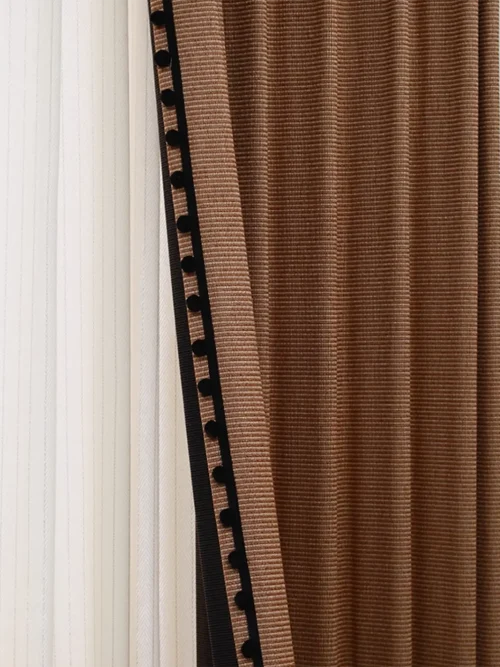
Layered French door curtains with ivory sheers across the glass and oatmeal outer panels
Plan your coverage

Choose the coverage you will use

Keep the room light

A sheer can soften the garden view and reduce the bare-glass feeling. Compare the weave in your room; a daytime appearance does not establish privacy after dark.

Make evenings more comfortable

For more coverage when the lights come on, compare an outer fabric and its available lining. Test your sample beside the doors under evening lighting as well as daylight.

Use two layers when you need both

Separate sheer and outer curtains offer different choices through the day. Allow enough depth for both hardware lines and enough side space for both layers to gather.

Choose by how you use the doors
Your priorityA useful starting pointCheck before ordering
Soft daytime lightA sheer hung above the whole openingEvening visibility, access to handles and space to draw the fabric clear before using the doors.
More evening coverageAn outer curtain with a suitable fabric or liningThe selected configuration’s opacity and the uncovered gaps around the installation.
Day-to-night flexibilitySeparate sheer and outer layersSpace for both hardware lines, the combined stack and the swing of the doors.
Fabric that moves with each doorA purpose-designed door-mounted treatmentDoor material, permitted fixings, bracket projection and handle clearance. Confirm a suitable product before choosing.

A blackout lining addresses light through the lined fabric. Coverage at the top, sides and center still depends on the installed layout.

Measure & check

Measure the treatment. Check the doorway.

Start with the planned hardware and how the doors move. Glass dimensions alone do not give you the size for a full-opening curtain.

Mark the covered run

For an above-door curtain, measure the intended usable rod or track run. Record the actual space available beyond each side of the frame; do not add a fixed allowance by habit.

Open both doors

Check the full swing, handles and anything beside the opening. Keep the moving door and its hardware clear of gathered fabric; check both leaves, even if you normally use only one.

Plan width and drop

Read what the selected width field means: a whole run, flat panel or finished coverage. Measure length from the required hanging reference, then decide the hem clearance for the threshold and floor.

Confirm the configuration

Check panel quantity, header, lining, seams and hardware suitability. Do not apply another fullness multiplier when the product already includes it. Confirm unclear dimensions before payment.

Make it work every day

A beautiful curtain still needs somewhere to go

If this is your route to the garden, think about the curtain’s open position first. A stack that sits on the glass can be acceptable in one room and frustrating in another. A stack in the doorway is a different problem.

Plan which door opens most often, where people walk and how you will reach the handle. A one-way curtain may be worth considering when only one side has space, provided the hardware supports that travel and the full stack fits there.

For a frequently used patio entrance

Prioritize easy movement and a hem that stays clear of the threshold. Avoid trailing fabric on the walking route. A loose tieback is not a substitute for enough usable stacking space.

For an inward-opening pair

Check the door’s path against the rod, rings, folds and any second layer. Increasing bracket projection changes the installation and its support requirements; confirm the hardware rather than guessing an offset.

For a mostly decorative doorway

Outer side panels can frame the doors while a separate treatment handles privacy. If the panels will not close, make that choice deliberately rather than expecting narrow decorative widths to cover the opening.

Questions before checkout

French door curtain questions

Short answers to the details that affect the order.

Can I hang regular curtains over French doors?

A suitable rod or track above the opening can support a conventional drapery treatment. Check the complete curtain weight, fixing locations, opening direction and space to move the panels clear. This does not establish that the same panel can be fixed directly to each door.

Above-frame curtains give a full-height treatment and stay on the wall or ceiling. Door-mounted treatments move with each door and need compatible fixings and handle clearance. Choose the installation type before measuring.

For an above-door treatment, start with the planned usable rod or track run. Then follow the product’s width definition and opening layout. Some interfaces include fullness; others ask for individual panel dimensions. Do not use the glass width or automatically multiply every measurement by two.

Will sheer curtains give privacy at night?

Do not assume they will. Visibility changes with the weave and the difference between indoor and outdoor lighting. If evening privacy matters, assess the selected material and consider a separate outer layer.

An above-door outer curtain with a suitable blackout lining may suit your light-control plan. Check the selected product’s options and the gaps around the installation. It still needs to move clear of the doorway before use.

How do I keep the curtain away from the handles?

Check the handle’s full movement and the door swing with the proposed hardware location. For above-door curtains, plan usable side stacking space. For door-mounted treatments, confirm the panel width, bracket depth and any lower restraint specified by that system.

Check the selected listing rather than assuming a complete kit. For example, the Oatmeal Pinch Pleat Linen Curtain listing specifies individual panels and does not include rods or curtain rings. Other configurations may differ.

Only when the exact fixing system is approved for your door material, dimensions, load and intended use. A fabric or header choice alone does not make the installation suitable for no-drill mounting.

Bring a softer finish to the doorway

Choose a fabric you enjoy in daylight, then confirm the coverage and clearances for the way you use your doors.

Shopping Cart
Scroll to Top

Unlock $30 Off
Your First order