
Introduction Learning how to install curtain rods without drill is essential for renters who want privacy without sacrificing their security deposit. The most effective no-drill methods include using tension rods for inside-mount windows , tap-in brackets for wooden trim , adhesive hooks for smooth walls , and magnetic rods for metal doors. These solutions allow you to install window treatments in minutes while keeping your walls pristine.
1. Tension Rods: The Simplest Inside-Mount Solution
How to Install :
Measure: Determine the width of your window frame opening to buy the correct size rod.
Thread: Slide your curtain panels onto the rod before installation.
Twist & Fit: Place the rod inside the frame. Twist or expand the rod until it fits securely against both jambs.
Pros & Cons:
Best For: Lightweight curtains, sheers, and cafe-style setups.
Limitations: May slip over time; not suitable for very heavy blackout curtains.

Tension rods require two parallel surfaces and are best for lightweight fabrics. They install in under 5 minutes without tools.
2. Tap-In Brackets: The Strongest Option for Wood Trim
How to Install :
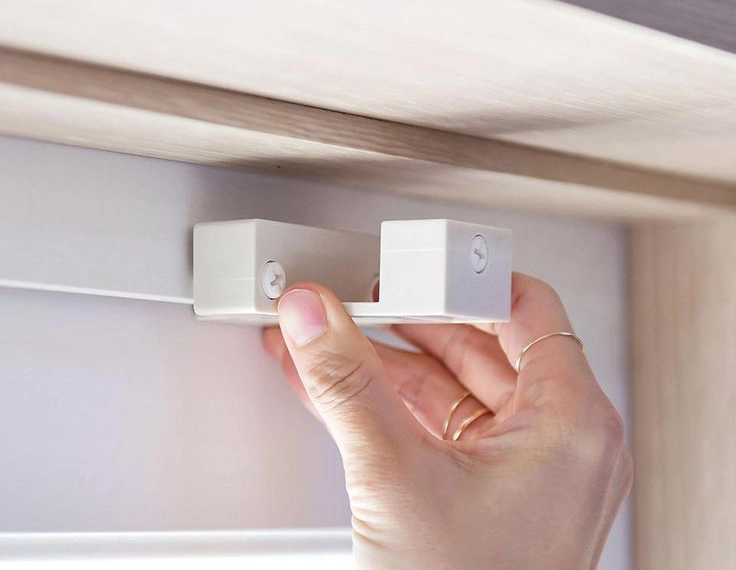
Position: Place the bracket on the top corner of your window trim.
Tap: Use a hammer to gently tap the bracket pins into the wood.
Hang: Place your standard curtain rod onto the brackets.
Why Experts Recommend It: These brackets can hold up to 20–30 lbs, making them strong enough for heavy curtains. Installation takes seconds.

Light sensitivity is a biological response. Choosing correct blackout curtains for the bedroom is a health investment, not just a decor choice.
3. Adhesive Command Hooks: Best for Smooth Walls
How to Install :
Clean: Wipe the wall surface with alcohol to ensure good adhesion.
Mark: Measure and mark where the hooks should go to ensure the rod is level.
Stick & Wait: Press the hook firmly for 30 seconds. Crucial: Wait at least 1 hour before hanging the curtain rod to let the adhesive set.
Warning: While convenient, these hooks typically hold only about 5 lbs. Overloading them can cause the hook to fall and potentially peel off paint or drywall.

Adhesive hooks work best on smooth surfaces. Always wait 1 hour after application before hanging rods to prevent failure.
4. Magnetic Rods: Specific for Metal Doors
How to Install :
Test: Ensure your door/frame is magnetic (aluminum will not work).
Attach: Simply place the magnetic bracket against the metal surface.
Adjust: Slide the rod to the desired width.
Performance: Weight capacity varies significantly by brand, ranging from 5 to 30 lbs. Note that they may shift in high-traffic areas.
Comparison Table: Choosing the Right Method
Use this table to decide how to install curtain rods without drill based on your specific needs.
| Method | Best Surface | Weight Limit | Installation Time |
| Tension Rods | Inside Window Frames | Low – Medium | ~5 Mins |
| Tap-In Brackets | Wooden Trim | High (20-30 lbs) | < 1 Min |
| Adhesive Hooks | Smooth Drywall/Tile | Low (~5 lbs) | ~1 Hour (wait time) |
| Magnetic Rods | Steel/Metal Doors | Varies (5-30 lbs) | < 1 Min |
Conclusion
When figuring out how to install curtain rods without drill, the “Tap-In Bracket” is generally the strongest and most reliable option for windows with wood trim. However, for metal doors or inside-mount setups, magnetic and tension rods are excellent alternatives.
Choosing the right hardware protects your security deposit and ensures your curtains stay up—even if they are heavy blackout drapes.
Looking for renter-friendly curtains? Check out our lightweight yet stylish collection designed for no-drill rods.
Frequently Asked Questions
Which no-drill method is strongest for heavy blackout curtains?
Tap-in Brackets (e.g., Kwik-Hang) are generally considered the strongest and most reliable option for heavy drapes, provided your windows have wood trim.
Weight Capacity: These brackets tap into the sturdy wooden frame, allowing them to support heavy curtains up to 20 pounds.
Stability: Testing shows they are incredibly sturdy and do not budge, making them a “runaway favorite” for stability.
Caution: Standard tension rods and small adhesive hooks are generally not recommended for heavy blackout curtains, as they may fail under continuous use.
Can I use no-drill methods on surfaces other than wood trim or drywall?
Yes, but you must match the product to the surface.
Metal Surfaces: Use Magnetic Curtain Rods which attach directly to ferrous metal doors or window frames.
Smooth Tile/Glass: Self-Adhesive Hooks work best on smooth, clean, non-porous surfaces like tile, but their capacity is limited to around 5 pounds.
Brick/Stone: These materials are difficult. You may need to explore specialized ceiling-mounted systems or confirm with your landlord if drilling is permissible in non-visible areas.
How do I remove adhesive hooks or tap-in brackets without damaging the wall?
Proper removal is key to protecting your security deposit.
Adhesive Hooks (Command Style): To prevent peeling paint or drywall, you must pull the release tab slowly and parallel to the wall surface. This disengages the elastic adhesive substance.
Tap-in Brackets: These leave only small pinholes in the wood trim. They can often be easily tapped out and are designed to be reused repeatedly on different windows.
Tension Rods: Simply twist the rod to release the tension; they leave no marks on the interior window frame.
Do no-drill curtain rods work for very wide windows?
Yes, but stability is a concern for wide spans.
Tension/Magnetic Rods: These methods are best suited for narrow to standard windows. If the span is too wide, the tension may not hold securely, and sagging is likely.
Solution: For wider windows using Command/Adhesive hooks, you should use a third hook in the center of the span to prevent the rod from drooping. Alternatively, the sturdier Tap-in Brackets can better handle longer, heavier rods.


