
Shape memory curtains are specially treated drapery panels designed to retain their pleats and folds over time.
Using high-temperature setting technology, shape memory curtains maintain a structured appearance with minimal maintenance, making them a popular choice for modern interiors. This guide explains what shape memory curtains are, how the technology works, and the key benefits they offer for everyday use.
Defining Shape Memory Curtains (SMC): The Technology Explained
The term “Shape Memory Curtains” refers not to a material, but to a revolutionary post-production finishing technique applied primarily to synthetic or blended fabrics.
What Makes SMC Different from Traditional Curtains?
Traditional curtains often suffer from a phenomenon known as “flare-out,” where the folds relax and the bottom edges lose their structure, requiring constant manual adjustment, steaming, or ironing.
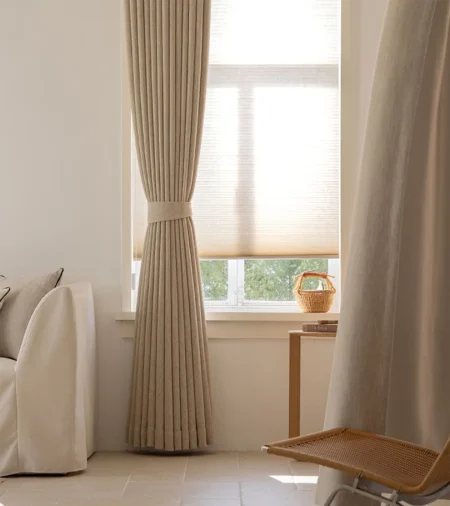
Shape Memory Curtains eliminate this issue entirely. By chemically and physically altering the fabric’s molecular structure under high heat and pressure, the drapery is given a permanent shape. Regardless of whether the curtains are drawn open, closed, or even laundered, the pleats will naturally fall back into their pre-set, uniform, and tailored position.
In summary, SMCs are defined by their ability to permanently hold a crisp, tailored shape, offering a luxurious and maintenance-free appearance that conventional curtains cannot sustain.

How Does the Memory Training Process Work?
The efficacy and permanence of the shape are entirely reliant on the controlled application of intense heat, often referenced by textile manufacturers as “Memory Training” or “Heat-Setting.”
The process typically occurs in a dedicated high-pressure steamer and follows precise steps:
Preparation and Molding: The fabric is physically molded and held in place in custom racks, forming the exact desired pleat style (e.g., pinch, goblet, or deep folds).
Thermal Application: The curtain panels are subjected to extremely high temperatures, often around 250℉ (approximately 120℃), using high-pressure steam for an extended period, generally up to two hours.
Molecular Reset: The intense heat causes the polymers within the fabric fibers to reset and stabilize into the new pleated structure. When the fabric cools, this new shape is locked in, creating the lasting “memory.”
According to experts in textile finishing, this precise heat treatment is the key element, ensuring the shape’s resilience against daily use and even rigorous cleaning processes.

Luxury Gold-Thread Striped Linen Voile – Metallic Sheer Drapes for Glam Interiors

Organic Textured Weave Linen Curtains

Premium Linen-Blend Sheer Curtains with Smooth Airy Drape
French Vintage Thick Chenille Curtains, 90% blackout, optional lining available

Florida Embossed White Semi Sheer Curtain Grommet

Designer 3D Floral Cut-Out & Fringed Striped Linen-Cotton Voile Curtains – Artisan Textured Sheer Drapery

Luxury Herringbone Wool Velvet Curtains – Thickened, High Blackout, Ideal for Bedrooms

Designer 3D Fringed Striped Curtains – Textured Tassel Drapes for Luxury Interiors

Custom Pleated Linen Cafe Curtain
5 Key Benefits of Choosing Shape Memory Curtains
The technology translates directly into tangible advantages that justify the investment, providing exceptional value and convenience for the modern homeowner.
Benefit 1: Permanent Tailored Aesthetics (Low Maintenance)
The most immediate benefit: Your curtains look consistently perfect. The pleats remain crisp and symmetrical without the need for manual adjustment, steaming, or ironing. This saves significant time and effort over the life of the curtain.
Benefit 2: Enhanced Durability and Resilience
The fabric is strengthened by the memory training process, making it highly wrinkle-resistant and resilient to the wear and tear of frequent handling. This longevity means the curtains maintain their aesthetic integrity for a significantly longer period compared to untreated fabrics.
Benefit 3: Superior Hygiene via Heat Treatment
The extreme heat required for the memory-setting process (around $250^\circ F$) acts as a natural sanitization step. This effectively eliminates common household allergens, bacteria, and dust mites embedded in the fabric, making SMCs a healthier choice, particularly for sensitive environments like bedrooms.
Benefit 4: Contribution to Energy Efficiency
Due to the uniform and dense structure of the set pleats, Memory Shape Curtains often create a better, tighter seal when closed compared to conventional drapes. This improved sealing minimizes heat loss in winter and heat gain in summer, helping to improve your home’s energy efficiency.
Benefit 5: Cost-Effectiveness Over Time
While the initial investment for a highly tailored product is higher, the long-term benefits outweigh the cost. The extended durability, reduced need for professional steaming/ironing, and energy savings make Shape Memory Curtains a highly cost-effective and valuable upgrade for any home.
In summary, SMCs offer a powerful combination of lasting aesthetics, health benefits, and simplified care, truly revolutionizing the standard for window treatments.

Shape Memory Curtains FAQ: Quick Reference
What is the main function of the fabric memory?
The primary function is to permanently lock the pleats and folds into the fabric, ensuring the curtains always hang in a crisp, consistent, and uniform vertical line, resisting shape distortion.
Are Shape Memory Curtains safe for the home?
Yes. The technology is safe and the high-temperature setting process has the added benefit of sterilizing the fabric, eliminating harmful bacteria and allergens without the use of harsh chemicals.
Does the fabric memory wash out?
No. The memory is a result of a molecular change caused by heat and is permanent. Most SMCs are machine washable, and the pleats are designed to return to their original shape upon natural drying.
Do I still need to iron memory shape curtains?
No, ironing is eliminated. The core benefit is the wrinkle resistance and pleat permanence, meaning steaming and ironing are generally unnecessary after cleaning.


